
eNews
#06 2025
Sub-Saharan Africa has lost nearly a quarter of its biodiversity
By By Dr Hayley Clements and Prof. Dave Thompson, with contributions from SAEON staff and research associates
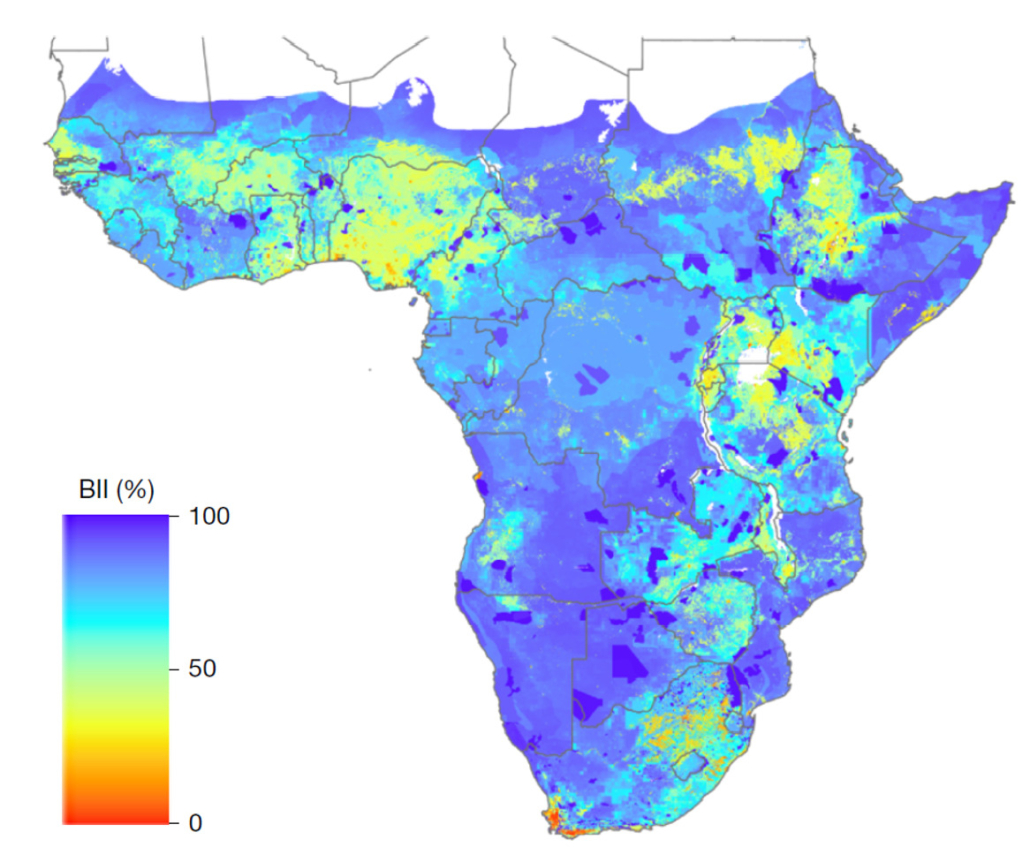
- 200 experts in African biodiversity contribute to comprehensive regional assessment.
- Sub-Saharan Africa has already lost 24% of its biodiversity since pre-industrial times.
- Large mammals have declined most severely.
- 80% of remaining wild plants, animals live outside of formally protected lands.
A new African-led study finds that sub-Saharan Africa has already lost 24% of its biodiversity since pre-industrial times. This means that, on average, the populations of diverse plants and animals across the region have declined by nearly a quarter. Some species, particularly large mammals, have declined much more severely, and protected areas are vital as safeguards for these species. The research also highlights that more than 80% of the region’s remaining wild plants and animals live outside of formally protected lands.
The study, published in Nature, provides the most comprehensive assessment of biodiversity intactness yet produced for sub-Saharan Africa. A unique feature of the project* is that it brings together a wide range of ecological knowledge from 200 experts in Africa’s diverse plants and animals, including researchers, field ecologists, rangers, tour guides, and museum curators working in the region’s changing landscapes (Figure 1). This enormous undertaking took over five years to complete.
“Many global biodiversity assessments do not represent African conditions well because they rely on sparse local measurements and draw insights from more data-rich regions of the world, where contexts are very different,” says lead author Dr Hayley Clements, from the Centre for Sustainability Transitions (CST) at Stellenbosch University. “By working directly with the people who study and manage African ecosystems, we were able to capture a much more realistic picture of where biodiversity is declining, where it is being sustained, and why.”
Several SAEON staff and honorary research associates were among the 200 experts working in the region who contributed their expertise on terrestrial African species and ecosystems to the assessment. SAEON inputs centred primarily on plants and vegetation across South and Southern Africa, and represent a combined total exceeding 100 years academic and on-the ground expertise.
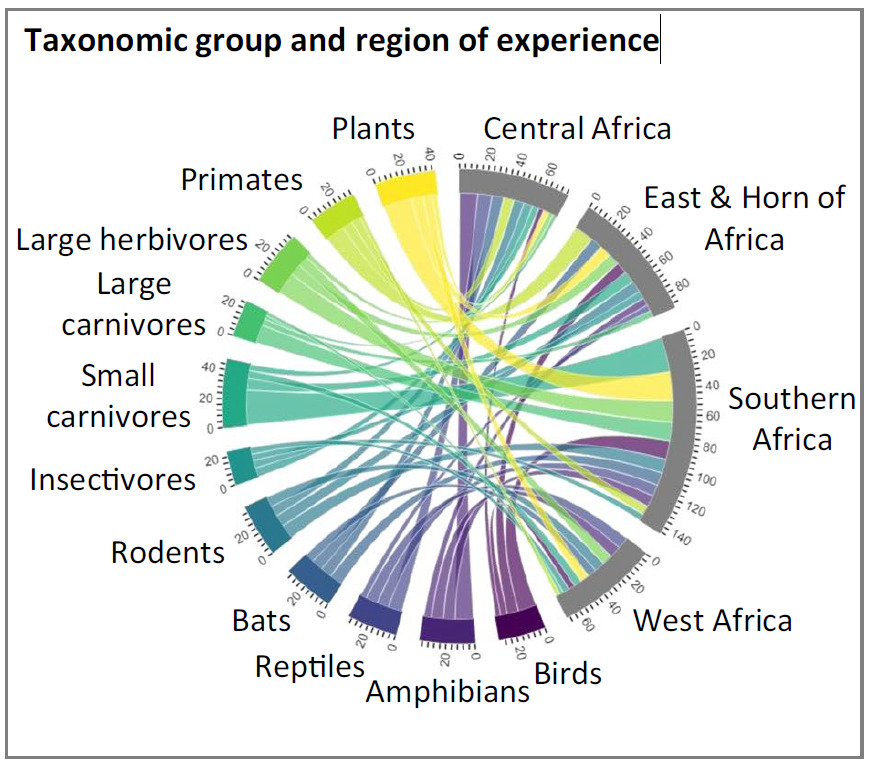
Figure 1. Attributes of the 200 participants, reflecting expertise across multiple taxonomic groups and regions. Reproduced from: Clements, H et al. The bii4africa dataset of faunal and floral population intactness estimates across Africa’s major land uses. Sci Data 11, 191 (2024). https://doi.org/10.1038/s41597-023-02832-6
Professor Helga van der Merwe, SAEON Arid Systems Ecologist and Extraordinary Associate Professor at North-West University, has considerable expertise in Succulent Karoo, Nama Karoo and arid Savanna systems, particularly in the assessment of long-term vegetation change in rangelands. ‘’This project was exciting for me as it brought together a large group of people with diverse expertise to get an improved assessment of the state of biodiversity in Africa – a research-poor continent compared to countries in the Global North. It was interesting to experience how the various expert opinions were ‘standardised’ in order to draw informed conclusions”.
Professor Dave Thompson, SAEON Biodiversity Scientist and Extraordinary Professor at North-West University, studies the herbaceous component of savannas and grasslands, and how these systems respond to the disturbances of fire, herbivory, alien invasive taxa, nutrient flux, and climate extremes. “The expert solicitation employed in the BII project is the epitome of the adage ‘The whole is greater than the sum of its parts’. Sharing and combing the knowledge of individuals across ecological systems is the only way to assess environmental change at large spatial and temporal scales. The product carries the synergy and functionality required to tackle contemporary, complex challenges”.
Dr Ryan Blanchard, SAEON Fynbos Node Manager and research fellow in the Centre for Sustainability Transitions at Stellenbosch University, was one of the contributing experts. He is a biodiversity expert working to understand how different drivers of change, such as invasive alien species, fire, and climate, impact biodiversity and associated ecosystem services. “I see this approach as a major step forward in improving biodiversity intactness indicators. The study is likely to increase confidence in the tool and the BII is set to potentially play a larger role in shaping future policy and land use decisions.”
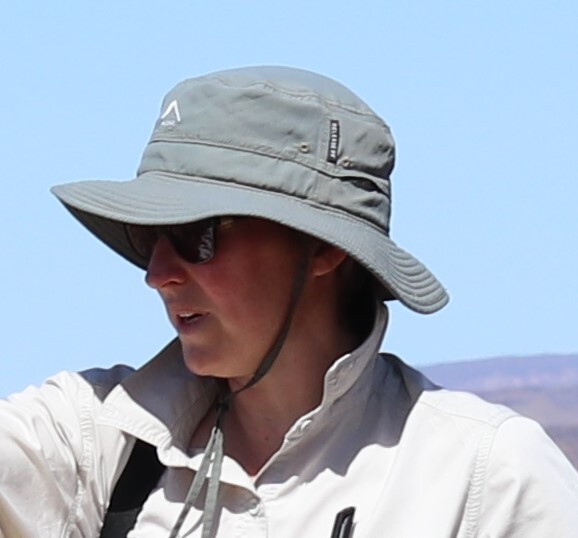
Professor Helga van der Merwe
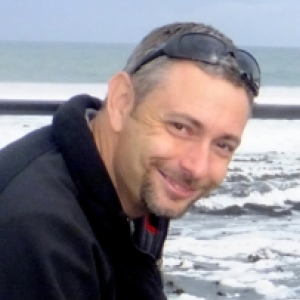
Professor Dave Thompson
Dr Ryan Blanchard
Dr Jasper Slingsby from the University of Cape Town and Honorary research associate at the SAEON Fynbos Node focused on the winter rainfall region, including the Fynbos and Succulent Karoo biomes of South Africa. “For me, a key contribution of the approach adopted in this study is that it allowed a semi-quantitative synthesis of the ecosystem specific impacts of a range of change drivers. This is key, because each ecosystem responds in very different ways. For example, Fynbos is very sensitive to livestock and many other extractive uses, while other biomes have evolved with large mammals and are more resilient. We have many case studies demonstrating these kinds of nuances, but they don’t cover the whole region. This approach of blending expert opinion with wall-to-wall datasets is the best we can do for now, and helps highlight where we need to focus further efforts.”
Professor Mariska te Beest from Utrecht University, the Netherlands, research associate at Nelson Mandela University, and honorary researcher associated with the SAEON Grasslands-Forests-Wetlands Node, was a contributing expert. Her research focusses on systems ecology and conservation, with a strong focus on ecological feedbacks between plants and climate, fire, herbivory and soils. Most of her research is related to open grass-dominated ecosystems and conserving their unique biodiversity. “The loss of biodiversity worldwide is one of humanity’s greatest current challenges. This study fills an important gap in our biodiversity knowledge of African ecosystems, that are generally underrepresented in global analyses. By providing a greater understanding of drivers of biodiversity loss and identifying areas with remaining biodiversity intactness, this study is fundamentally important to help decision-makes making the right choices to conserve our precious African biodiversity”.
Expert contributions to the project were also made by SAEON collaborators from South African, African and international universities and conservation agencies, who provided inputs across taxonomic groups – especially plants, birds and mammals.
Dr Jasper Slingsby

Professor Mariska te Beest