
eNews
#06 2025
Tribute: Professor William Bond
By the SAEON Team
We honour the life and legacy of Professor William Bond, the ”humble, gentle giant despite his formidable international credentials”, whose intellect, vision and dedication shaped both the upwards trajectory of SAEON and the global understanding of fire-prone ecosystems.
William’s ties to SAEON go right back to the beginning of the organisation. As far back as 1999, he was among the pioneers supporting a national approach towards long-term ecological and environmental observation science. His early involvement helped lay the conceptual and scientific foundation on which SAEON was built. Many years later, after retiring from the University of Cape Town (UCT), William joined SAEON as the Chief Observation Scientist, a position he held from 2014 to 2018. His international status immediately provided a substantial boost to SAEON’s reputation. His appreciation for understanding the large-scale and long-term changes in ecosystems made him a perfect fit for the role.
During his time at SAEON, William advised and guided our managers and scientists, and succeeded in formalising the SAEON node science plans. Taking an active interest in science being performed at each of the nodes, even participating in field trips where students and interns reaped the benefit of interacting with him, he made an effort to ensure he was approachable and accessible to young emerging scientists and interns. He was a mentor to not only SAEON scientists, but also students, interns and learners, and continued to shape the minds of young scientists, as he had throughout his university career. He had a strong appreciation of the importance of science engagement and was the driving force behind Change is in the Air, a SAEON video and booklet for awareness of global change issues in South Africa.
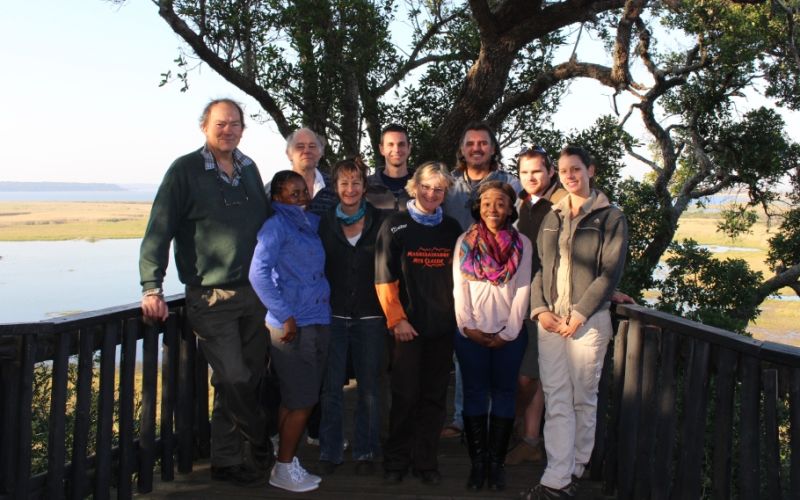
William (far left) on a research site visit to the Grassland-Forest-Wetland (GFW) Node with (L-R back row) then SAEON observations scientist Prof Tim O’Connor, GFW technician Paul Gordijn, skipper assisting the team, the late Peter Timm, GFW technician Mathew Becker, and GFW intern turned student Monique Nunes. Front row, from left: GFW Node intern Sinethemba Ntshangase, GFW Node coordinator Sue J van Rensburg, national office research administrator Beate Hölscher and GFW Node intern Nasiphi Ntshanga.
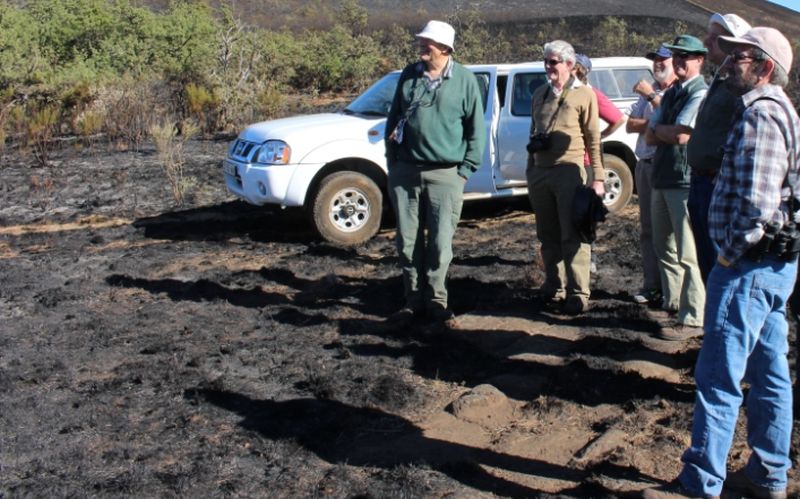
William (far left) on a site visit to the GFW Node Cathedral Peak LTER site, with Terry Everson, Ed Granger, Colin Everson (SAEON), Steve McCain and Tim O’Connor (SAEON).
While with SAEON, William managed to further his own research career. He was an author on no less than 150 publications after he retired from UCT and continued to supervise postgraduate students and attend conferences while with SAEON. A charismatic and impactful speaker, William travelled extensively throughout his career, sharing his knowledge and (often provocative) ideas with students and researchers throughout the world. Together with his prolific publications (over 470 books and papers, and an h-index of 117), this led to him achieving national (successive NRF A-ratings) and international recognition, including Foreign Associate of the National Academy of Sciences (USA) and Fellow of the Royal Society (UK).
William was a regular at many local conferences and became something of an icon at the annual Savanna Science Networking Meeting after his research interests broadened from fynbos ecosystems to savannas. William was not shy of controversy, and his talks frequently invoked debate and spurred new ways of thinking. He often had a sharp question for other speakers, as many of his past students will attest to.
In his early career, his views and research on the positive role of fire in fynbos ecosystems were both controversial and pioneering. Later, and during his time with SAEON, William became a strong advocate for “open ecosystems” (grasslands and savannas) and made important contributions to the current drive for African open ecosystems to be recognised as natural, ancient and highly diverse ecosystems (rather than degraded forests) and to the fight against naive and misguided tree planting initiatives.
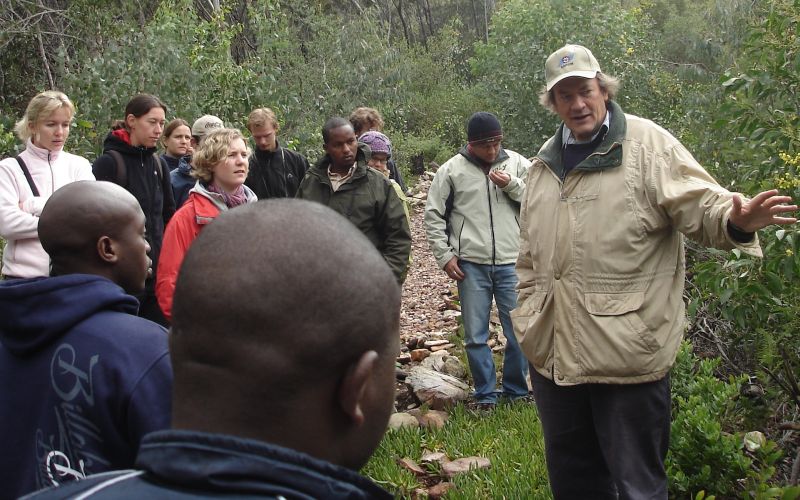
On a hiking trail during a Graduate Student Network Indibano, Professor William Bond described many of the interesting and complex aspects of fynbos and pointed out a few of the diverse plants and some of the life history differences between them.
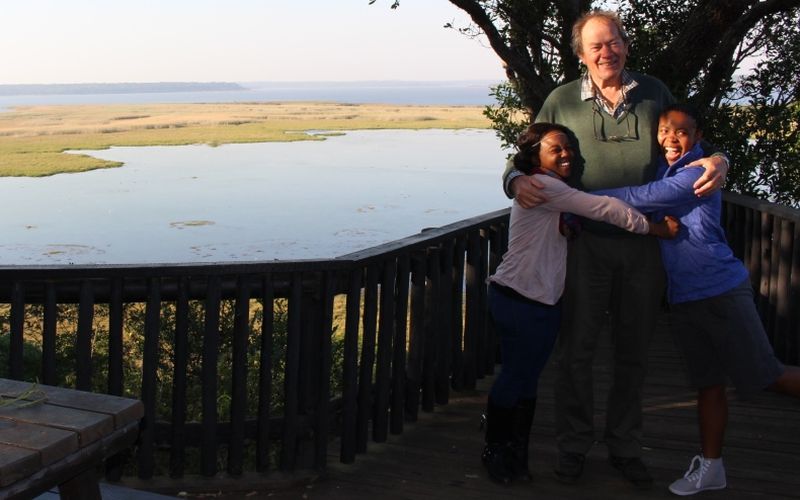
William at False Bay, St Lucia, with Grassland-Forest-Wetland Node interns Nasiphi Ntshanga and Sinethemba Ntshangase (June 2014) during one of the node’s field trips to iSimangaliso Wetland Park.
William never contemplated retirement to be the end of his working life. He defined himself as a field ecologist and educator; continuously questioning, discovering and contributing to ecological theory and information. Thus, even after stepping away from formal roles at SAEON, he continued to offer guidance, thoughtful feedback, and even assisted with editing and refining scientific and science engagement material.
Perhaps the most important contribution William made to SAEON, and the discipline of ecology, was his ability to inspire. Boundless enthusiasm, an endless flow of ideas and an ability to see past minor details and bring out the critical issue in any ecological conversation made him a favourite of so many students and early-career researchers. This is reflected in the success of so many of his past students, who are now established scientists and environmental managers.
“I have had the privilege of knowing William since my undergrad days at UCT in the early 1990s, a time when he first catalysed my interest in ecology. He also supervised my Master’s thesis and gave me my first real job. The experiences he provided his students, including myself, helped pave the way to where they are today. The best thing, I believe, he taught us all was not to accept dominant paradigms blindly. A confessed contrarian, I think one of his greatest legacies is that he instilled in all his students the courage to challenge conventional thinking. From him, I learned to view things from different perspectives with a critical eye, while maintaining an almost childlike curiosity, to reveal new insights leading to more rigorous conceptual understanding. He will be sorely missed.” ~ Sue J van Rensburg