
eNews
#06 2025
WaterNet Symposium: EFTEON shares insights on the impacts of different pollution sources on water resources
By Nolusindiso Ndara, Faith Jumbi and Zanele Ntshidi, NRF-SAEON
The WaterNet/WARFSA/GWP–SA Symposium is one of Africa’s key gatherings for water researchers, practitioners and policymakers. Held every year in African countries, it provides an ideal platform to share ideas, research and innovations in water resources management.
This year, Zambia had the honour of hosting the 26th WaterNet Symposium under the theme “Accelerating Implementation of Integrated Water Resources Management to Close the Water Investment Gap by 2030 and Beyond in Eastern and Southern Africa”.
The theme was explored through five sub-themes:
- Changing hydro-climatic regimes and planning tools for climate-resilient pathways
- Water, land, energy and agriculture
- Water, ecosystems and the environment
- Water governance for sustainable, equitable and affordable water services
- Innovative approaches, practices and technologies for affordable water supply and sanitation
Over two days, the symposium featured parallel sessions, poster presentations and open discussions, creating opportunities for collaboration and knowledge exchange among experts from across the continent.
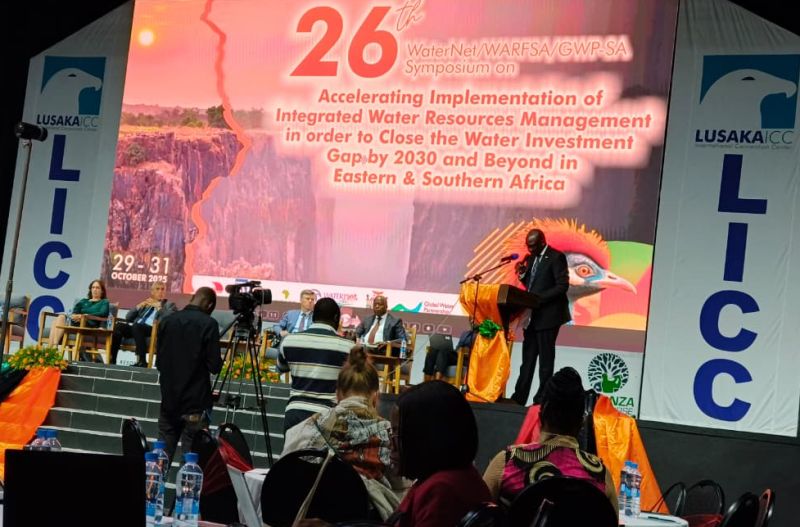
The guest of honour, Hon. Collins Nzovu, the Zambian Minister of Water Development and Sanitation, delivering the official opening address.
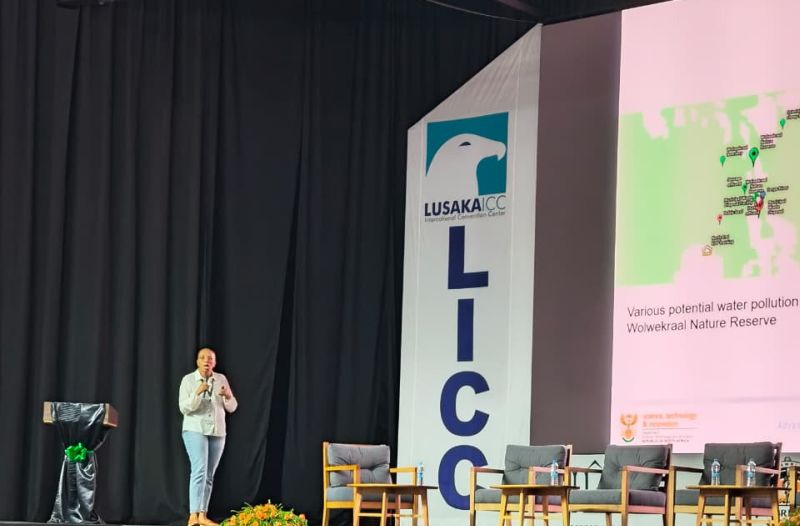
Dr Nolusindiso Ndara presenting at the symposium under the sub-theme Water, ecosystems and the environment.
Represented by Dr Nolusindiso Ndara, EFTEON’s Landscape Scientist responsible for hydrology, SAEON/EFTEON was proud to be part of this year’s event. Dr Ndara presented under the Water, land, energy and agriculture theme, sharing the preliminary findings from a case study on water quality assessment of a non-perennial river in Wolwekraal Nature Reserve, Western Cape, South Africa. The research highlights a collaborative effort between EFTEON and the SAEON Arid Lands and Fynbos Nodes.
Water quality is an increasingly important topic across Africa, and the presentation drew a large audience and very positive feedback. One of the main takeaways from the discussion was the value of citizen science – getting local communities involved in monitoring and understanding their own water resources. This approach aligns closely with SAEON/EFTEON’s commitment to working with communities, ensuring that the science we do remains relevant and impactful on the ground.
The symposium was a valuable opportunity to connect with colleagues across Africa, share SAEON/EFTEON’s work and learn from others tackling similar challenges. It reinforced the importance of collaboration, innovation and community involvement in advancing sustainable water management on the continent. It also highlighted the continental reach of Dr Ndara’s work and provided valuable feedback from researchers worldwide, including recognition of the monitoring protocols that SAEON/EFTEON employs.
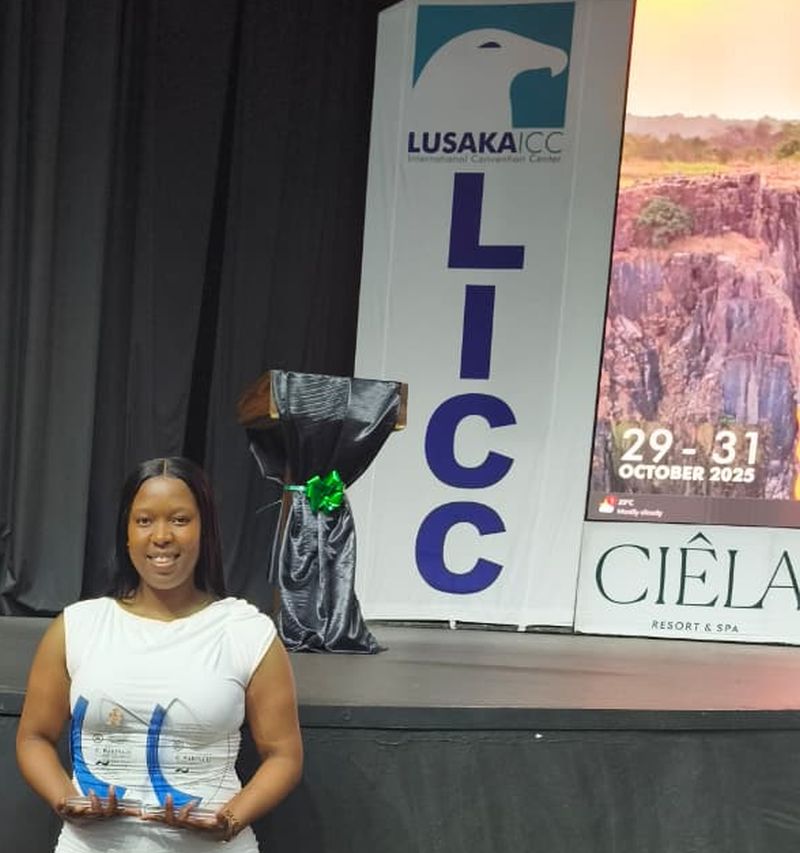
Vuyelwa Mtyobila from South Africa scooped the Lewis Jonker Award for the Best Young Water Scientist, a regional award presented annually to a young researcher (under 35 years of age) for outstanding research in Integrated Water Resources Management.
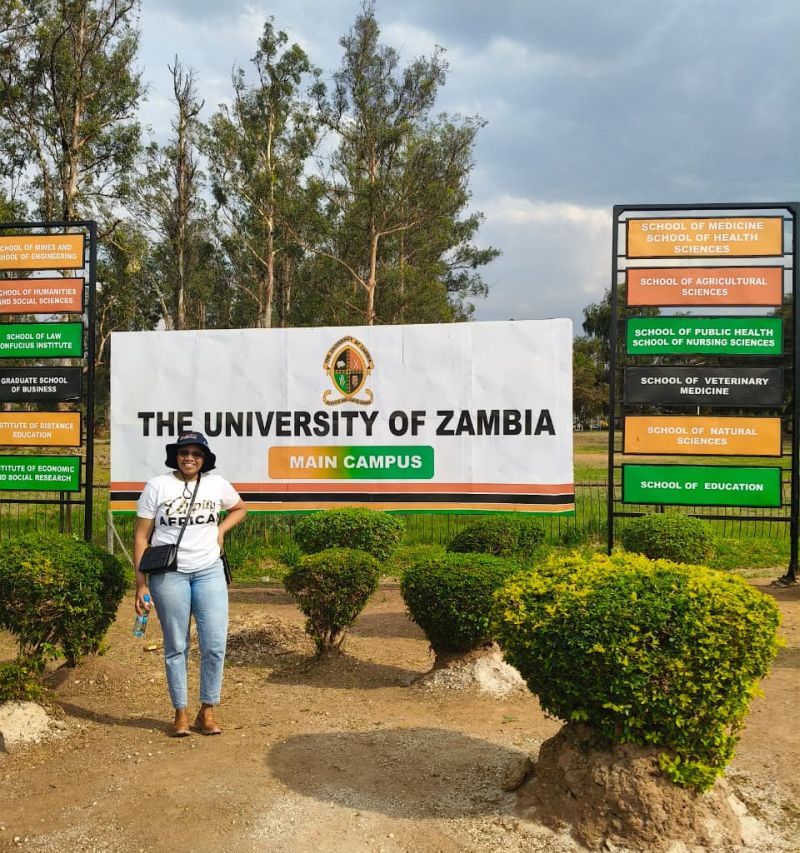
Dr Nolusindiso Ndara at the University of Zambia during the city tour.
Further insights
Apart from the educational programme, delegates had the opportunity to experience Zambian culture through two excursions – a Lusaka City tour, which included a technical stop at the Chunga Faecal Sludge Treatment Plant, visits to the Freedom Statue and Lusaka National Museum, a panoramic drive past key landmarks and shopping at Kabwata Cultural Village. At the Cultural Village, delegates explored the market, admiring the beauty and craftsmanship of the handmade items sold by local artisans.
Other delegates went for the Citizen Science for Water Quality and Quantity Monitoring co-organised by the International Water Management Institute and GroundTruth at Kalimba Reptile Park, offering hands-on training in low-cost water monitoring techniques using simple tools and AI-powered mobile applications. Citizen science continues to be a major topic across the continent, empowering community members to contribute to research by collecting relevant data.
Following the city tour and visit to the citizen science site, delegates attended a gala dinner where they were entertained with traditional Zambian dances. It was fascinating to learn about the different cultural dances and the occasions during which they are performed. The live performances were followed by an awards ceremony, where outstanding young scientists were recognised for their presentations across various themes.
I am proud to share that the Lewis Jonker Award for the Best Young Water Scientist was presented to Ms Vuyelwa Mtyobila, a scientist from South Africa, who is pursuing her PhD at the University of the Witwatersrand in Johannesburg.