
eNews
#05 2025
Data in action: Highlights from the Graduate Student Network Indibano
By Margaretha Burger, Chairperson, SAEON Graduate Student Network
The NRF-SAEON Graduate Student Network (GSN) hosted its 17th annual Indibano from 31 August to 5 September at the beautiful Qwantani Berg and Bush Resort near Harrismith in the Free State.
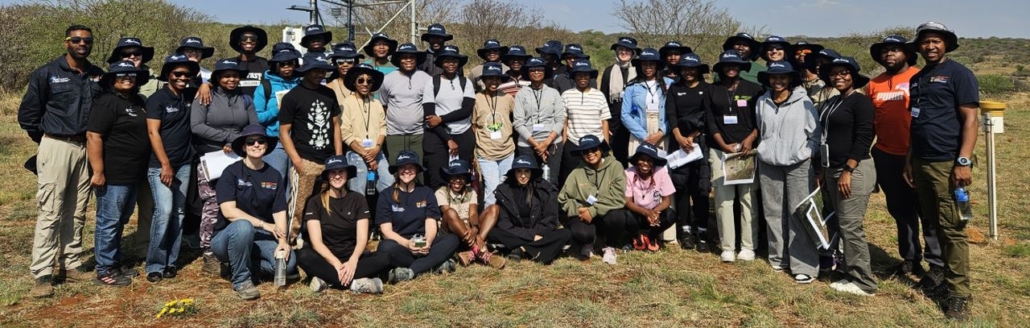
Thirty students were selected from a large and competitive group of applicants to participate in a week filled with research presentations, workshops, panel discussions and networking opportunities. (Photo: Margaretha Burger)
Centred on the theme “From Data to Action: Science for a Sustainable Future”, the event challenged delegates to consider how their work can drive real-world impact. The theme was immediately brought to life as SAEON staff members Sue van Rensburg and Dr Phumlile Cotiyane-Pondo opened the event by highlighting the organisation’s terrestrial and marine research initiatives. This foundation was built upon as students presented their own diverse research over the next two days, covering topics from microplastic pollution and soil carbon dynamics to fynbos rainfall response modelling and machine learning for monitoring crop water stress.
Beyond individual presentations, the week’s keynote speakers fostered vibrant dialogue by exploring the interconnectedness of our environmental systems. On land, Dr Michelle Tedder underscored the value of long-term grassland monitoring, and Dr Robin Nicolay provided a deep dive into soil carbon dynamics. The conversation then turned to water, featuring Nicole du Plessis on ocean governance and Professor Fhumulani Mathivha on managing climate-driven hydrological extremes. Ultimately, Dr Emma McKinley tied these themes together, closing the series with a powerful talk on how marine social sciences are vital for informed global decision-making.
Building practical skills in deciphering ecosystem processes
To translate theory into practice, the programme placed a strong emphasis on practical skill-building through immersive workshops. Students leveraged the incredible power of Digital Earth Africa in a remote sensing session with Mpho Sadiki, mastered data management and analysis in R with Leonex Ntando, and learned the intricacies of carbon flux measurement from EFTEON’s Dr Amukelani Maluleke. These sessions armed participants with essential tools for handling data and deciphering ecosystem processes.
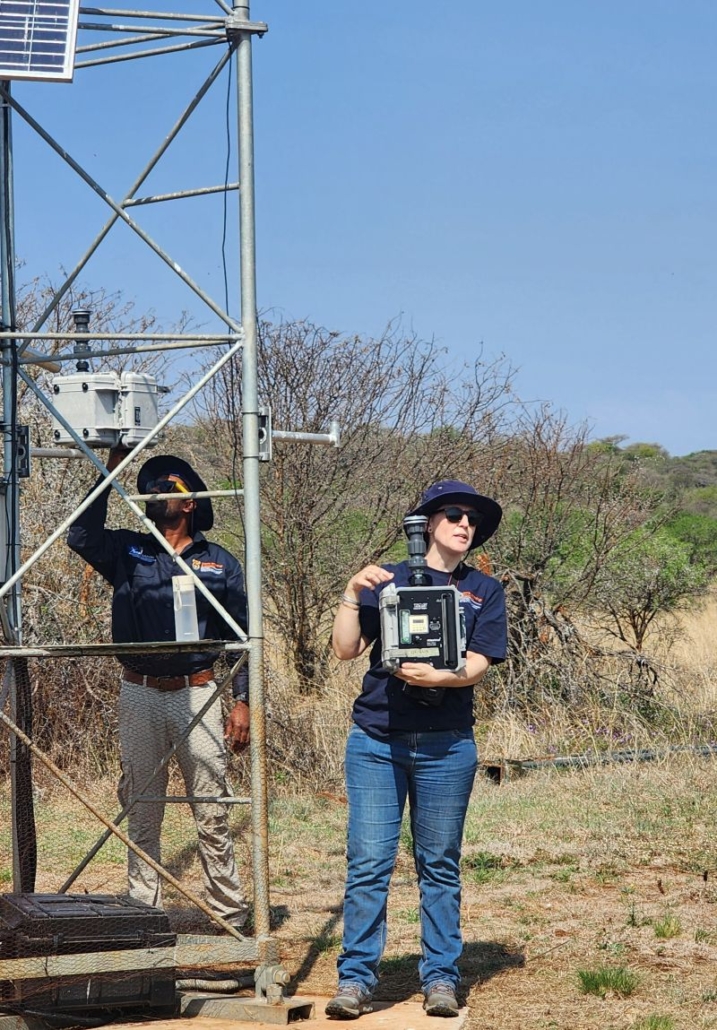
Demonstration of the bioacoustic recorder and weather monitoring equipment at Spioenkop Nature Reserve.
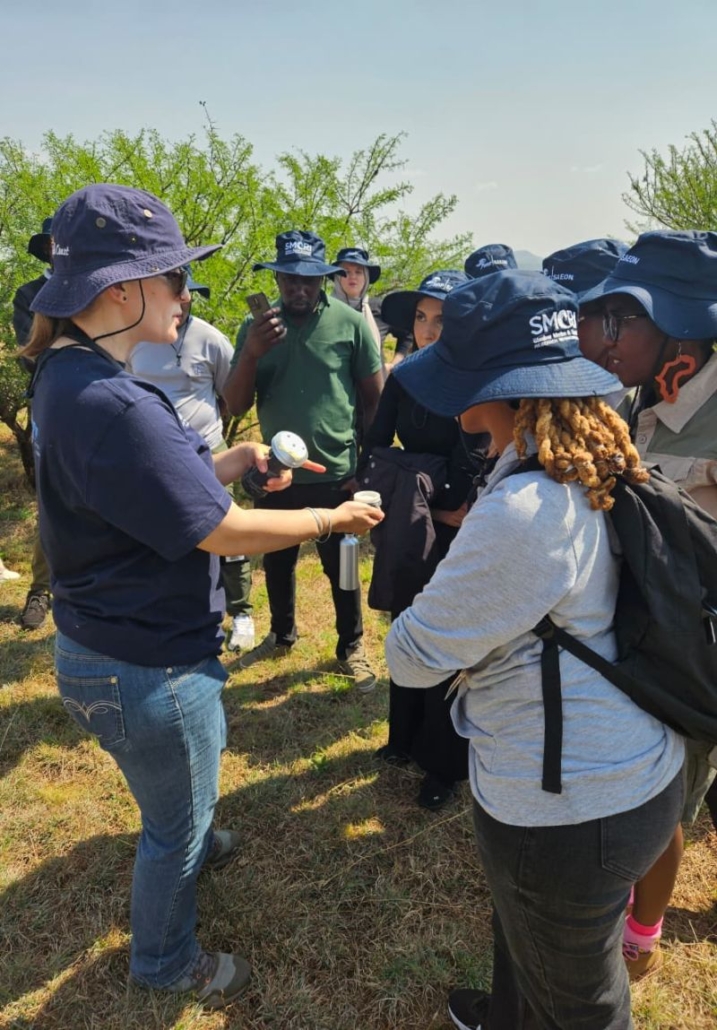
Students being shown the wet deposit sampler that collects rainfall samples that can be later analysed for chemicals contained in it.
Science communication
The strategic importance of science communication was emphasised in the panel discussion, “From Data to Action”. The panel featured Professor Fhumulani Mathivha, Dr Amukelani Maluleke, Dr Kathleen Smart, Dr Rebecka Henriksson (Lingon Sustainability Science), Zanele Shezi (EFTEON) and Clea Welch (GSN). Together, they highlighted key strategies for building community trust, such as engaging stakeholders early, maintaining long-term relationships and presenting research findings in local languages.
Building on these insights, the Izindaba Zesayensi session offered a hands-on opportunity for students to put science communication into practice. Participants were challenged to translate published SAEON research for a broader public audience, and rose to the task with creativity, clarity and impact.
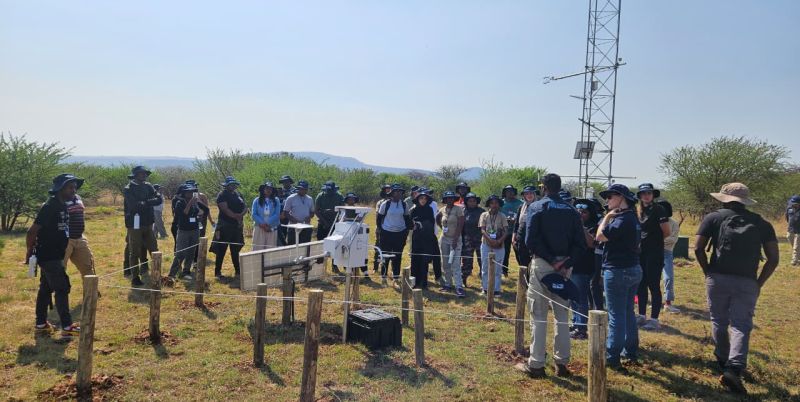
Students being shown the MiniVol instruments at the flux tower that measure dust particles in air over time.
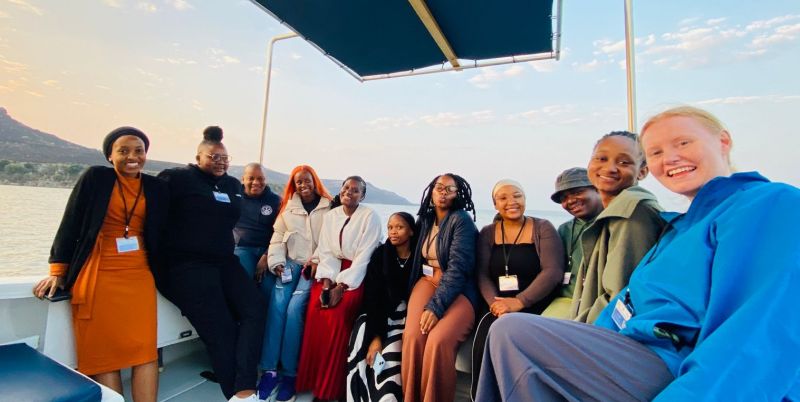
Students enjoying the view on Sterkfontein dam in between presentations. (Photo: Margaretha Burger)
Field trip
This immersion in the local environment continued with a full-day field trip on the Thursday. The excursion began at the Drakensberg Pumped Storage Scheme, exploring the role of hydropower in stabilising South Africa’s energy grid. Later, at Spioenkop Nature Reserve, the EFTEON and Grassland Node team demonstrated their state-of-the-art research infrastructure, allowing students to engage firsthand with carbon flux towers, precision weather stations and hydrological instruments.
The Indibano concluded with a prize-giving ceremony recognising the most outstanding student presentations and science communication efforts. Congratulations to our award recipients: Ameera Yacoob (Grassland Node) received the top award for her presentation, “Machine Learning Approach for Quantifying Crop Water Stress in Smallholder Farms Using Unmanned Aerial Vehicle Multispectral Imagery”. Lindani Sifanele earned second place for “Homestead Hedges as Vectors for Invasive and Poisonous Plant Species in Rural and Urban Communities in the Central Eastern Cape”, and Karabo Moloi was awarded third place for “Mapping the Current and Future Distribution of Invasive Alien Shrubs in South Africa’s High-Elevation Grasslands”.
Delegates left Qwantani inspired, connected and equipped with new skills and perspectives to take their science from data to action.
Acknowledgements
The GSN extend their heartfelt appreciation to Qwantani Berg and Bush Resort for their professionalism, warm hospitality and excellent meals, which made the stay as enjoyable as it was productive. We would also like to thank the Node sponsors and adjudicators, without which this event would not have been possible.
We look forward to seeing everyone again next year as we continue strengthening collaboration, community and the future of environmental science in South Africa.